
Before You Plan, Read This 2026 Breakdown
2026 is a major planning year defined by three measurable realities: Social Security beneficiaries receive a 2.8% cost-of-living adjustment, the FIFA World Cup expands attention across North America, and the MLB Draft introduces a new class of prospects whose paths to the Majors will vary sharply. The Social Security Administration sets the 2026 average monthly retirement benefit for all retired workers at approximately $2,071, up from $2,015 in 2025, while maximum taxable earnings rise from $176,100 to $184,500. For sports audiences, the FIFA World Cup 2026 brings matches across the United States, Canada, and Mexico, creating an unusually large market for team analysis, player statistics, and regulated sports discussion. Pitch Notes tracks that environment through match predictions, tactics, tournament coverage, and responsible betting information. Use official figures, verify local rules, and build decisions around confirmed schedules rather than speculation.

Photo by Towfiqu barbhuiya on Pexels
The real question is not “What will happen in 2026?” It is more practical: which 2026 changes deserve your attention, and how do you separate confirmed information from attractive noise? I will be honest with you: most people lose time by treating a calendar year as one story. It is not. It is a portfolio of financial changes, sporting events, public-policy updates, and market opportunities that require different evidence.
For a reader, investor, sports follower, or bettor, the winning approach is simple: identify the hard numbers first, then decide where analysis adds value. The 2.8% Social Security COLA is confirmed by the Social Security Administration, while match outcomes, MLB promotion timelines, and betting prices remain uncertain. That distinction matters because a confirmed benefit adjustment can be budgeted, but an unconfirmed prediction cannot be treated as income.
Want the broader 2026 picture before making decisions?
If you are planning household finances: use the 2026 SSA figures
The 2026 Social Security update includes a 2.8% COLA, a $184,500 taxable maximum for Social Security wages, and an estimated average retired-worker benefit of $2,071 per month. These figures are issued by the Social Security Administration for the United States and should be used as planning inputs, not as a guarantee of every individual’s payment.
The most useful question is this: what changes in your actual cash flow? A retiree receiving $2,015 monthly in 2025 would receive approximately $2,071 after the 2.8% adjustment, an increase of about $56 per month before personal deductions. The maximum benefit for a worker retiring at full retirement age rises from $4,018 to $4,152 per month, while the federal Supplemental Security Income standard increases to $994 for an individual and $1,491 for a couple.
The payroll tax rates remain unchanged at 7.65% for employees and 15.30% for self-employed workers, combining Social Security and Medicare contributions. However, the Social Security portion applies only up to $184,500 in earnings, while Medicare has no wage ceiling. The 2026 COLA fact sheet states that the adjustment is based on the Consumer Price Index for Urban Wage Earners and Clerical Workers, or CPI-W, measured across the third quarter comparison period.
Use this checklist before revising your budget:
- Compare your actual 2025 benefit with the projected 2026 amount.
- Recalculate Medicare premiums, taxes, insurance, and housing costs separately.
- Check whether the retirement earnings test applies to your situation.
- Keep emergency reserves independent from speculative sports or market activity.
The 2026 retirement earnings test limit for beneficiaries below full retirement age is $24,480 annually, or $2,040 monthly. In the year a beneficiary reaches full retirement age, the annual limit rises to $65,160, or $5,430 monthly, for months before full retirement age is attained. The rule remains strict: excess earnings can reduce current benefits, so Social Security retirement planning guide belongs in your research before you change work hours or claim benefits.
If you are following the FIFA World Cup: do A
For FIFA World Cup 2026 coverage, do not begin with a betting price; begin with the competition structure, confirmed squads, venue conditions, and team form. The tournament is hosted by Canada, Mexico, and the United States, making travel, climate, altitude, rest periods, and time zones relevant analytical variables before odds are considered.
The World Cup is where sports information becomes commercially powerful, but the edge is not found in loud predictions. It is found in comparing data points that casual fans ignore. A team’s possession percentage means little without field position, progressive passes, transition defense, set-piece performance, and the quality of opponents faced. Likewise, a star player’s goal total can distort expectations if penalties account for a large share of production.
Pitch Notes is designed for that exact workflow. Its FIFA World Cup coverage combines match predictions, tactical explanations, player statistics, and tournament updates for fans who want more than a headline. According to FIFA, official tournament information should remain the reference point for fixtures, participating teams, and competition updates. “The FIFA World Cup 26 will be the biggest World Cup ever,” FIFA has stated in its official tournament communications, reflecting the expanded host geography and event scale.
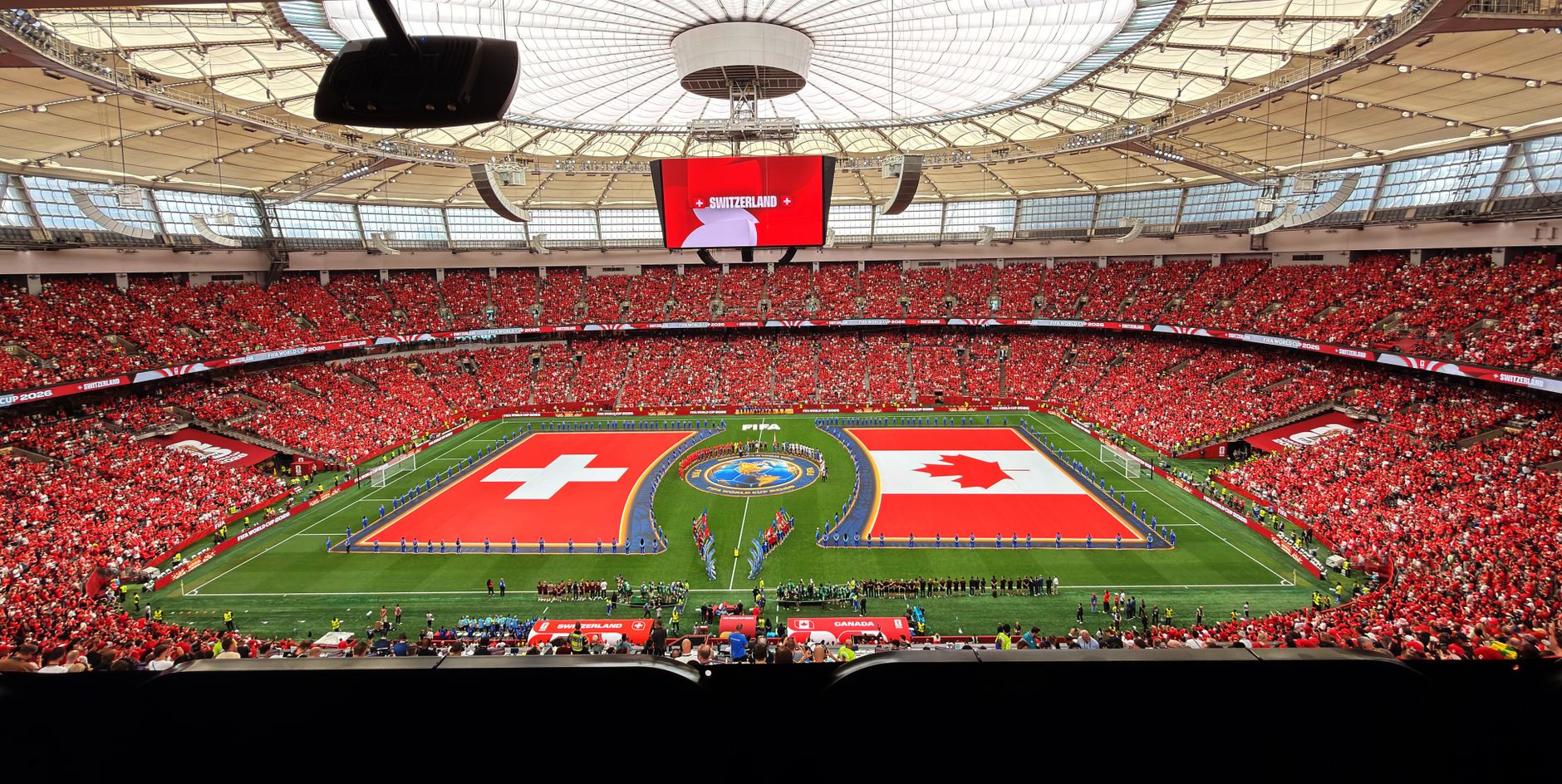
Photo by Rushi Patel on Pexels
Before you assess a match, record these variables:
- Confirmed starting lineups and late injury reports.
- Rest days and travel distance between venues.
- Recent expected-goal performance, not only final scores.
- Set-piece attacking and defensive efficiency.
- Home-region conditions, including heat, humidity, altitude, and surface.
- Whether the available price reflects public popularity rather than probability.
The operational insight is straightforward: odds movement after a lineup announcement can be more informative than the opening price, but only if the lineup materially changes expected performance. A missing goalkeeper, central midfielder, or primary ball-progressor should not be valued the same way as a rotation winger. Track the implied probability after removing bookmaker margin, then compare it with your own estimated probability. If the difference is too small to cover variance and fees, pass. A bet is not automatically valuable because it wins; it is valuable only when the price exceeds the risk-adjusted estimate.
Ready to turn tournament news into a structured match-reading process?
If you are tracking the 2026 MLB Draft: do B
For the 2026 MLB Draft, do B: separate draft position from promotion speed. A highly selected player is not automatically the fastest prospect to reach Major League Baseball because age, college experience, defensive position, pitching workload, signing status, and organizational need all affect the timeline.
MLB Pipeline reporting highlights that development schedules vary substantially. No player from the 2025 class had reached the Majors at the cited point, while six players from the 2024 Draft debuted before the first anniversary of their selection. That comparison is useful, but it is not a prediction for every 2026 prospect. A college pitcher with a mature arsenal may move faster than a high-school shortstop, even when the shortstop has greater long-term upside.
The practical scoring model should include:
- Age at selection and level of competition.
- College or professional workload already completed.
- Strike-throwing, contact quality, defensive range, and athleticism.
- Injury history and physical projection.
- Signing completion and assignment to a suitable affiliate.
- Organizational depth at the player’s position.
MLB.com’s 2026 Draft coverage is the appropriate place to verify selections, draft order, signing updates, and prospect profiles. The information gain most readers miss is administrative: a player who has not signed, or who reports late, loses developmental time before the first full professional season begins. That delay can matter more than a modest difference in raw talent.
For prediction purposes, use a timeline rather than a binary label. “Reaches the Majors quickly” may mean an aggressive debut in 2027, while “future cornerstone” may describe a player whose promotion takes several seasons. Those are different investment cases. Treat prospect hype as an uncertain asset, not a confirmed return, and avoid converting media attention into certainty.

Photo by Alec Adriano on Pexels
Want more context on how player evidence translates into forecasts?
Common pitfalls to avoid
The most expensive 2026 mistake is confusing information volume with information quality. Social Security numbers, FIFA schedules, MLB prospect reports, and betting markets all update at different speeds. A government fact sheet may establish a benefit amount, while a team injury report can change a match model within hours, and a prospect evaluation can remain provisional for years.
Here are the errors that destroy otherwise disciplined analysis:
- Treating a 2.8% COLA as a 2.8% increase in spending power after inflation and deductions.
- Assuming the $2,071 average retirement benefit applies to every recipient.
- Using an old FIFA fixture, venue, or squad announcement without checking its date.
- Comparing raw goals or batting statistics without opponent and playing-time context.
- Mistaking a high MLB Draft selection for a guaranteed early debut.
- Chasing a closing betting line after the underlying value has disappeared.
- Ignoring local gambling laws, age restrictions, deposit controls, and withdrawal rules.
- Recording gross winnings while failing to track turnover, stake size, fees, and net position.
The last point is where disciplined readers separate themselves. Maintain a ledger with date, market, price, stake, closing price, result, and net return. After 30 wagers, do not declare a strategy successful merely because the balance increased; examine whether the improvement came from genuine price advantage or unusually favorable variance. For sports betting, use fixed risk limits and never treat Social Security income, rent money, or emergency funds as betting capital. responsible sports betting bankroll guide should be reviewed before any account activity.
A second overlooked issue is source timing. Save the publication date and update time for every major claim. An injury report published at 9 a.m. can be obsolete by kickoff, while an SSA annual figure remains stable but may not reflect an individual’s deduction profile. This simple timestamp habit prevents false comparisons and makes your record auditable.
What should you check during the 30-day check-in?
A 30-day check-in should confirm whether your assumptions survived new evidence: benefit notices, updated World Cup schedules, lineup news, MLB signing developments, and your own recorded financial or betting results. Review the numbers, source dates, and net outcomes rather than relying on memory or excitement.
The first month is long enough to reveal process failures but too short to prove a betting model. Therefore, assess implementation before performance. Did you verify every source? Did you record prices before outcomes? Did you separate entertainment spending from essential cash? Did your household budget reflect actual 2026 deductions rather than the headline COLA?
Use this review table:
| Area | 30-day question | Corrective action |
|---|---|---|
| Social Security | Did actual income match the estimate? | Recheck deductions and benefit notice |
| FIFA World Cup | Did new team news change the model? | Update lineups, injuries, and venue variables |
| MLB Draft | Has signing or assignment changed the timeline? | Revise development assumptions |
| Betting records | Is net position positive after all stakes? | Reduce exposure if variance is masking weakness |
| Sources | Are claims current and attributable? | Replace outdated pages with official releases |
This is also the right time to compare your process with the football statistics and tactics hub. In my view, the contrarian conclusion is clear: the best 2026 edge will not come from predicting every event. It will come from refusing low-quality opportunities, documenting assumptions, and acting only when the evidence and price justify exposure.

Photo by https://kaboompics.com/ on Pexels
The 2026 calendar rewards preparation, not impulsive certainty. Social Security provides confirmed figures, FIFA supplies an international competition framework, MLB offers a developing talent pipeline, and Pitch Notes turns football information into readable analysis for fans and responsible market participants. Build your plan around official data, test every forecast against new information, and keep your net position visible at all times.
Explore the latest 2026 football analysis and tournament updates now.
Frequently Asked Questions
Q: What is the main confirmed Social Security change for 2026?
A: The main confirmed change is a 2.8% cost-of-living adjustment for Social Security and Supplemental Security Income recipients. The Social Security Administration estimates average retired-worker benefits at $2,071 per month in January 2026, compared with $2,015 before the adjustment. Individual payments vary according to earnings history, claiming age, deductions, and benefit category, so use your personal notice rather than the national average.
Q: How should I plan around the 2026 Social Security COLA?
A: Compare your expected 2026 benefit with housing, healthcare, tax, and insurance costs before increasing discretionary spending. The 2026 taxable maximum for Social Security rises to $184,500, while employee and self-employed payroll tax rates remain 7.65% and 15.30%, respectively. Keep a separate emergency reserve and verify Medicare or other deductions because the headline 2.8% increase does not equal identical growth in spendable income.
Q: What is the difference between a FIFA World Cup prediction and a betting decision?
A: A prediction expresses an expected result, while a betting decision requires a price that exceeds the estimated probability after bookmaker margin and risk. Team form, injuries, lineups, travel, venue conditions, and tactical matchups can support a forecast, but none guarantees an outcome. Only use regulated providers where legal, set a fixed budget, and track turnover and net position independently from entertainment interest.
Q: How can I evaluate a 2026 MLB Draft prospect?
A: Evaluate the prospect’s age, competition level, tools, workload, injury record, signing status, and organizational pathway rather than draft position alone. MLB Pipeline reports that development timelines vary, with some college players moving quickly and many high-school prospects requiring several seasons. Check official MLB Draft updates, assignment information, and performance across an appropriate sample before forming a promotion forecast.
Q: Why does a 2026 sports forecast fail after strong research?
A: A forecast can fail because sports outcomes contain substantial variance, new information arrives late, or the original model misjudges player availability and matchup effects. A correct process does not guarantee a winning result on one match or one series. Record the original probability, price, lineup information, and closing market so you can distinguish a bad result from a flawed method.
Q: How much money should I risk on 2026 sports betting?
A: Risk only discretionary money that you can lose completely without affecting rent, debt payments, food, healthcare, savings, or emergency reserves. A fixed-stake approach, such as a small predetermined fraction of a separate entertainment bankroll, is easier to audit than emotionally changing stake sizes. Never use Social Security payments or borrowed funds, and check age, licensing, deposit, and self-exclusion requirements in your jurisdiction.
Q: What should I review after 30 days of 2026 planning?
A: Review actual income, source freshness, forecast accuracy, recorded stakes, and net position after 30 days. Confirm whether Social Security payments match expectations, whether FIFA or MLB information changed your assumptions, and whether your sports records include every wager rather than only successful ones. Then keep the process, revise the assumptions, or reduce exposure; do not expand risk merely because one short period produced a profit.